What Is Road Grading: A Complete Guide
What Is Road Grading: A Complete Guide
Anyone who has undergone a bumpy dirt road just after a heavy rain or realized how smooth a gravel driveway feels after maintenance understands the difference road grading makes. Road grading is one of the most basic and initial processes in construction and land maintenance but a lot of property owners and even new equipment operators are not really sure what it involves. This article will discuss what road grading is and how it works along with knowing why it matters and what to expect if you are planning a grading project of your own.
What Is Road Grading?
Road Grading is the procedure of leveling and smoothing a road surface or plot of land with the help of heavy equipment known as a grader. It helps in creating a flat and even surface with the correct slope for proper drainage and stability. Grading is used on the following:
- gravel roads
- dirt roads
- construction sites
- driveways
- parking lots
At its core, grading solves two problems: uneven terrain and poor water drainage. An ungraded road develops ruts, potholes, and low spots that collect water, weakening the surface over time and making it unsafe or uncomfortable to drive on. Grading corrects these issues by redistributing soil and gravel to create a consistent, properly sloped surface.
How Does Road Grading Work?
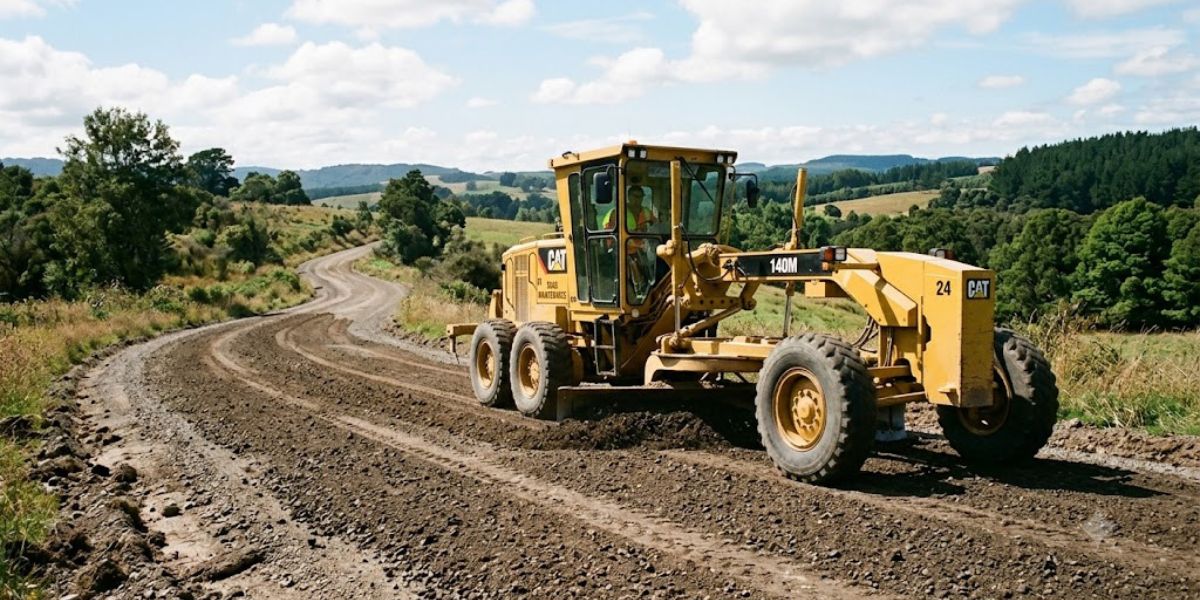
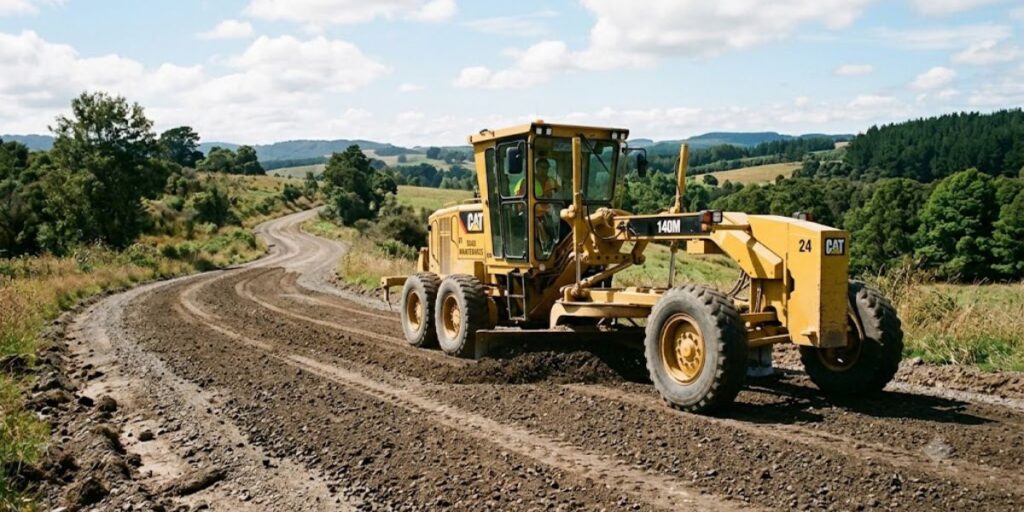
Road grading is typically performed using a motor grader, a long vehicle with a wide, adjustable blade mounted between its front and rear axles. The blade can be angled, tilted, and raised or lowered with precision, allowing the operator to cut down high spots and fill in low spots in a single pass.
The general grading process includes the following steps:
- Site inspection – The area is assessed for existing drainage patterns, soil type, and problem areas like ruts, potholes, or standing water.
- Clearing debris – Loose rocks, branches, and other obstructions are removed so the blade can work the surface cleanly.
- Initial cutting – The grader blade cuts into high points and uneven sections to loosen and redistribute material.
- Shaping the crown – The surface is shaped with a slight crown, or center-to-edge slope, so water runs off to the sides instead of pooling in the middle.
- Compaction – In many projects, a roller or compactor is used after grading to firm up the surface and improve durability.
- Final pass and inspection – The grader makes finishing passes to smooth out any remaining irregularities before the job is signed off.
For larger or more technical projects, operators may also use laser-guided or GPS-guided grading systems, which allow for extremely precise elevation control across long stretches of road.
Why Is Road Grading Important?
Grading isn’t just a cosmetic fix. It plays a direct role in safety, longevity, and cost savings for any road or lot.
- Improved drainage – A properly graded surface channels water away instead of letting it collect and erode the base material.
- Extended surface life – Correcting ruts and low spots before they worsen prevents larger, more expensive repairs down the road.
- Safer travel – Smooth, even surfaces reduce the risk of vehicle damage, tire wear, and accidents caused by potholes or soft spots.
- Better foundation for paving – On new construction sites, grading creates a stable, compacted base that asphalt or concrete can be laid on top of.
- Compliance with regulations – Many municipalities require graded and properly draining roads to meet safety and construction codes.
Types of Road Grading
Not all grading projects are the same. Depending on the surface, purpose, and scope, grading generally falls into a few categories:
- Rough grading – The initial, large-scale leveling of raw land, typically done before construction begins to establish basic elevation and slope.
- Fine grading – A more precise leveling pass done after rough grading, used to prepare a surface for paving, landscaping, or final construction.
- Maintenance grading – Routine grading performed on existing gravel or dirt roads to smooth out ruts, potholes, and washboarding caused by weather and traffic.
- Drainage grading – Grading focused specifically on correcting slope and water flow issues, often used to fix chronic flooding or erosion problems.
When Should Road Grading Be Done?
Timing matters when it comes to grading. Grading a road that’s too wet can cause the material to smear rather than shape properly, while grading a surface that’s too dry can make it difficult for the blade to cut cleanly. Most professionals recommend grading:
- After significant rainfall has passed and the surface has begun to dry but is still slightly moist
- Before winter weather sets in, to correct drainage issues before freeze-thaw cycles worsen them
- On a routine schedule (often every few months for high-traffic gravel roads) to prevent long-term damage
- Immediately after noticing ruts, potholes, or standing water forming on a surface
Equipment Used in Road Grading
While the motor grader is the primary tool, several other pieces of equipment often support a grading project:
- Motor graders: The main equipment used to cut, shape, and smooth the surface.
- Compactors and rollers: Used after grading to firm up the surface and reduce future rutting.
- Water trucks: Used to add moisture to overly dry material so it compacts and shapes properly.
- Skid steers or loaders: Sometimes used to move larger amounts of material or clear debris before grading begins.
Hiring a Professional vs. DIY Grading
Small driveways or short stretches of private road can sometimes be handled with rented equipment, but most road grading projects are best left to experienced professionals. Operating a motor grader takes skill, small miscalculations in blade angle or depth can create new drainage problems instead of solving them. Professional grading contractors also bring the right equipment for compaction and drainage correction, along with an understanding of local soil conditions and regulations, which is especially important for roads that will see regular traffic or need to meet municipal standards.
Conclusion
Road grading is a simple concept with a significant impact: leveling and shaping a surface so it drains properly, lasts longer, and stays safe to travel on. Whether it’s a private driveway, a rural gravel road, or the foundation for a new construction project, regular and proper grading prevents small problems from turning into costly repairs. Understanding the basics of how and when grading should be done can help property owners and contractors alike keep their roads in top condition year-round.
Frequently Asked Questions
How often should a gravel road be graded?
Most gravel roads benefit from grading every two to four months, though high-traffic roads or areas with heavy rainfall may need more frequent attention to prevent rutting and drainage issues.
How much does road grading cost?
Costs vary widely based on the length of the road, the condition of the surface, and local labor rates, but many contractors charge by the hour or by linear foot. Getting a quote from a local grading contractor is the best way to get an accurate estimate.
Can I grade my own driveway?
Small, simple driveways can sometimes be graded with rented equipment, but achieving proper slope and drainage takes practice. For anything beyond a short, flat driveway, hiring a professional helps avoid costly mistakes.
What’s the difference between grading and paving?
Grading levels and shapes the underlying surface, while paving adds a hard-wearing top layer like asphalt or concrete. Grading is typically a required first step before paving can begin.
What causes a road to need regrading?
Heavy rainfall, repeated vehicle traffic, freeze-thaw cycles, and poor initial drainage design are the most common causes of ruts, potholes, and uneven surfaces that require regrading.
Does weather affect when grading can be done?
Yes. Grading is most effective when the soil has some moisture but isn’t saturated. Grading during or right after heavy rain, or when the ground is bone dry, generally produces poor results.
Is compaction necessary after grading?
In most cases, yes. Compaction firms up the graded surface and significantly reduces how quickly ruts and potholes reappear, especially on roads that see regular traffic.
How long does a road grading project take?
This depends on the length and condition of the road, but routine maintenance grading on a short gravel road can often be completed in a few hours, while larger or more damaged sections may take a full day or more.
Related Articles
Bulk Earthworks vs General Earthworks: What’s the Difference?
Earthworks form the base of almost every construction project whether it is…
How Much Does a Driveway Cost to Build in Perth?
Constructing a new driveway in Perth can drastically change the appearance and…
How to Prepare the Ground for a Horse Arena
A well developed horse arena begins from under the surface. Before implementing…