How to Prepare the Ground for a Horse Arena
How to Prepare the Ground for a Horse Arena
A well developed horse arena begins from under the surface. Before implementing footing or arena equipment, you are required to prepare the ground so it can help horses and riders for regular use without becoming uneven or muddy. Proper ground preparation enhances safety and extends the life of the arena along with lowering maintenance costs over time.
Whether you are developing a small private riding arena or a larger facility, the key principles remain the same: select the right location and check the soil. Also establish drainage and create a stable base along with installing suitable footing. In this article, we have provided with step by step guide for preparing the ground for a horse arena.
Steps to Prepare the Ground for Horse Arena
1. Choose the Right Location
The first step is selecting a suitable site. Ideally, the arena should be on relatively level ground with good natural drainage. Avoid low-lying areas where water naturally collects, as standing water can quickly damage the arena surface.
Consider the surrounding landscape as well. Trees, buildings, and hills can affect sunlight, wind, drainage, and debris. A location with good access for horses, riders, maintenance equipment, and delivery vehicles is also important.
Before construction begins, check local regulations and determine whether you need permits or approvals. It is also wise to identify underground utilities and consider how water will move across the property during heavy rainfall.
2. Test and Evaluate the Soil
Understanding the existing soil is one of the most important parts of arena construction. Soil composition can vary significantly from one property to another. Clay-heavy soil, for example, can hold water and become sticky, while sandy soil may drain quickly but lack stability.
A basic soil assessment can help determine whether the existing ground can be used as part of the arena foundation or whether unsuitable material needs to be removed and replaced.
Professional soil testing is particularly useful for larger arenas or sites with difficult ground conditions. Testing can provide information about soil texture, drainage characteristics, compaction, and other factors that influence construction decisions.
3. Clear and Excavate the Site
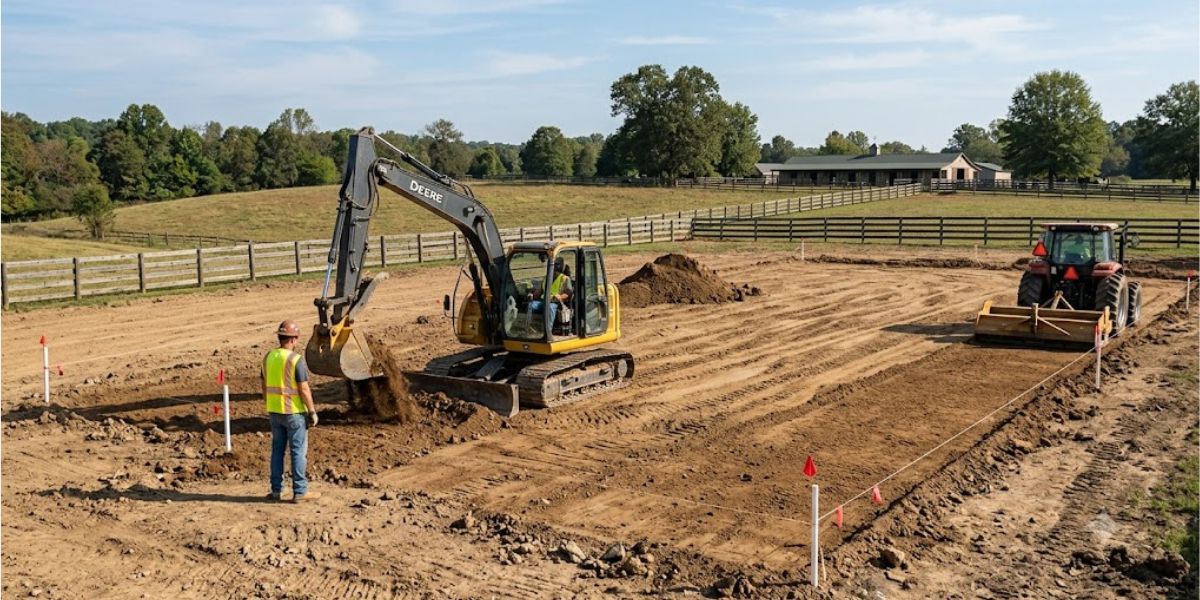
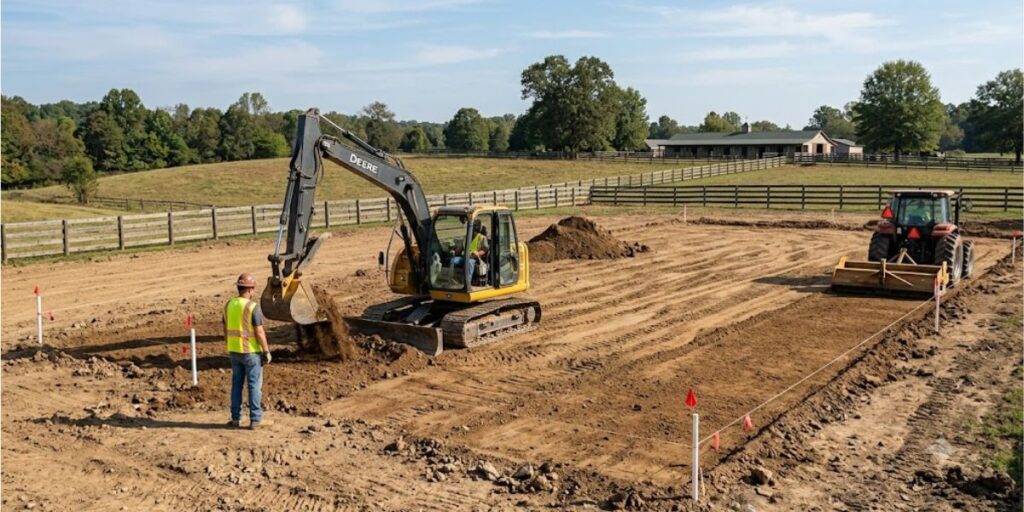
Once the location and soil have been assessed, remove vegetation, roots, rocks, debris, and organic topsoil from the arena area. Organic material can decay over time, causing the surface to settle unevenly.
The amount of excavation required depends on the existing site conditions and the arena design. The goal is to create a firm, consistent foundation rather than simply placing footing over grass or loose soil.
After clearing the area, shape the ground according to the planned drainage and finished arena levels. This stage should be completed carefully because mistakes in grading can cause drainage problems later.
4. Establish Proper Drainage
Good drainage is essential for a safe and durable horse arena. Without adequate drainage, rainwater can accumulate beneath or on top of the footing, creating mud, uneven areas, and potentially dangerous riding conditions.
The arena should generally be graded so water moves away rather than pooling in the center. Depending on the site, you may also need perimeter drains, drainage channels, or underground perforated drainage pipes.
A professional contractor like Earthwest Civil can determine the most appropriate drainage system based on soil type, rainfall, slope, and local conditions.
Drainage should be planned before the base and footing are installed. Trying to correct drainage problems after the arena is finished can be expensive and disruptive.
5. Compact the Subgrade
After excavation and grading, the exposed soil becomes the subgrade. This layer needs to be properly compacted so it provides a stable platform for the layers above it.
A suitable compactor or roller is typically used to consolidate the soil. The exact compaction requirements depend on the soil and construction design.
The finished subgrade should be firm and reasonably uniform. Soft spots should not be ignored. If certain areas remain weak, they may need to be excavated and replaced with appropriate material.
6. Install the Base Material
A horse arena generally needs a strong base beneath the riding surface. Depending on the design, this may consist of one or more layers of crushed stone or other suitable aggregate.
The base helps distribute loads and creates a stable foundation for the arena footing. It should be installed in appropriate lifts and compacted thoroughly rather than dumped into one thick layer.
The exact aggregate size and thickness will depend on the site, arena design, drainage system, and expected use. A contractor experienced in equestrian arenas can recommend the appropriate specification.
The base should also be graded carefully. An uneven base will eventually affect the surface above it.
7. Consider a Separation or Geotextile Layer
In some arena designs, a geotextile fabric is installed between the subgrade and aggregate layers. This material can help prevent different soil and aggregate layers from mixing, particularly when the underlying soil is soft or unstable.
Geotextiles are not automatically required for every arena, so the decision should be based on site conditions and professional recommendations.
If used, the fabric should be installed correctly without excessive wrinkles, gaps, or damage. Proper installation is important because the material needs to perform as part of the overall foundation system.
8. Install the Arena Footing
Once the foundation and drainage system are complete, the final riding surface can be installed. Arena footing may include materials such as washed sand, manufactured footing products, or blends designed specifically for equestrian use.
The ideal footing depends on the type of riding you plan to do. Dressage, jumping, reining, and general schooling can have different surface requirements.
Avoid choosing footing based solely on price. The material should provide appropriate traction and cushioning while remaining stable enough for the horses’ movements.
The footing should be distributed evenly across the arena. Its depth should follow the recommendations for the specific material and intended use.
9. Check the Finished Surface
Before allowing horses onto the arena, inspect the entire surface. Look for low spots, excessive loose material, exposed base material, drainage problems, or areas that feel unusually hard or soft.
Walk and, where appropriate, carefully test the surface to identify inconsistencies. The arena should feel reasonably uniform throughout.
It is also important to establish the correct maintenance routine from the beginning. Regular dragging, watering when appropriate, removing debris, and monitoring drainage can help preserve the surface.
10. Plan for Long-Term Maintenance
Ground preparation does not end when the arena is completed. Even a well-designed arena requires regular maintenance.
Heavy use can cause footing to become uneven, while weather can alter moisture levels and surface conditions. Periodic grading, replenishment of footing, drainage inspections, and removal of accumulated organic material may be necessary.
Keep an eye on the arena after heavy rain. Persistent puddles, muddy sections, or erosion around the perimeter may indicate drainage or grading issues that should be addressed promptly.
Common Mistakes to Avoid
Several mistakes can shorten the life of a horse arena. Building directly over vegetation or organic soil can lead to settlement. Ignoring drainage can result in persistent water problems. Using unsuitable aggregate can create an unstable base, while installing too little or too much footing can affect traction and performance.
Another common mistake is attempting to save money by skipping professional site evaluation. A small amount saved during construction can become a much larger expense if the arena later needs major drainage or foundation repairs.
Frequently Asked Questions
1. Can I build a horse arena on grass?
It is generally not recommended to simply place arena footing directly over grass. Vegetation and organic topsoil can decompose and cause uneven settlement. The site should normally be cleared, graded, and prepared to create a stable foundation.
2. Does a horse arena need drainage?
Yes, effective drainage is extremely important. Water that remains in the arena can create mud, uneven footing, and unsafe riding conditions. The appropriate drainage solution depends on the soil, slope, rainfall, and arena design.
3. How deep should a horse arena be excavated?
There is no universal excavation depth. It depends on the existing soil, drainage requirements, base design, and chosen footing. A site assessment should determine how much material needs to be removed.
4. What is the best soil for a horse arena?
There is no single soil type that is ideal for every arena. Stable, well-draining ground is generally easier to work with. Clay-heavy or poorly draining soil may require additional drainage and foundation preparation.
5. What should go under horse arena footing?
A typical arena may have compacted subgrade, a suitable aggregate base, and sometimes a separation or geotextile layer beneath the riding footing. The exact construction should be designed for the site’s soil and drainage conditions.
6. How important is compaction?
Compaction is critical because it creates a stable foundation and helps reduce settlement. Poorly compacted material can shift under repeated horse traffic, producing ruts and uneven areas.
Final Thoughts
Preparing the ground properly is the foundation of a safe, functional, and long-lasting horse arena. The process involves more than leveling a patch of land and adding sand. Site selection, soil evaluation, excavation, grading, drainage, compaction, base construction, and footing selection all work together to create a dependable riding surface.
If you are planning an arena, invest time in the groundwork and drainage before focusing on the visible riding surface. A carefully prepared foundation can improve performance, reduce maintenance, and help your arena withstand years of horse and rider traffic.
Related Articles
Bulk Earthworks vs General Earthworks: What’s the Difference?
Earthworks form the base of almost every construction project whether it is…
How Much Does a Driveway Cost to Build in Perth?
Constructing a new driveway in Perth can drastically change the appearance and…

Car Park vs Hardstand: What’s the Difference
When thinking to plan a residential or industrial development project, selecting the…