Road Construction Explained
Road Construction Explained
Road builds the backbone of modern civilization that connects cities and towns allowing the transportation of people and goods along with services. Road construction is a complex engineering method that combines planning and design along with material science and heavy machinery. It creates long term surfaces that are capable of going through traffic loads and weather conditions.
Getting to know how roads are constructed provides valuable insight into the infrastructure that encourages daily life and economic growth along with regional development. This guide discusses the total road construction procedure from initial planning to final maintenance.
The Planning and Survey Stage
Before starting any construction, engineers and planners need to study extensively to understand the best route for a road. This included going through traffic patterns and population density along with environmental impact and geological conditions. Surveyors use modern tools like GPS and drones to map the terrain correctly. Soil testing is also carried out to get to know the ground’s load bearing capacity and drainage properties along with susceptibility to erosion.
Engineers design the road’s alignment according to this data along with measuring the width and curvature to be sure of the safety and efficiency. Environmental impact assessments are carried out to verify potential effects on local ecosystems and water bodies along with communities and mitigation strategies that are developed accordingly. This stage also involves securing necessary permits and land acquisitions along with public consultations to identify community concerns before starting the construction.
Design Considerations
Road design involves multiple technical considerations that determine how the road will perform over its lifetime. Engineers must account for expected traffic volume, vehicle types, and axle loads to calculate the appropriate pavement thickness and material composition. Drainage design is critical, as poor water management leads to premature pavement failure, potholes, and erosion. Cross slopes, camber, and drainage channels are incorporated to direct water away from the road surface.
Geometric design elements such as sight distance, curve radius, and superelevation are calculated to ensure vehicles can travel safely at designated speeds. Additionally, designers must consider future expansion, utility placement, pedestrian pathways, and accessibility features to create a road that serves the community for decades.
Site Preparation and Earthwork
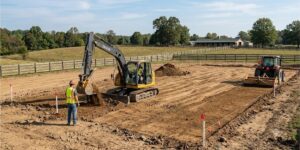
Once designs are finalized, construction begins with clearing the site of vegetation, debris, and any existing structures. This is followed by earthwork, which involves cutting and filling the land to achieve the desired road profile. Heavy machinery such as bulldozers, excavators, and graders reshape the terrain according to engineering specifications.
Proper compaction of the subgrade, the natural or engineered soil layer beneath the road, is essential to prevent future settlement and cracking. Compaction is achieved using rollers that apply pressure to increase soil density. Temporary drainage systems are often installed during this phase to manage rainwater and prevent erosion while construction is underway.
Building the Pavement Layers
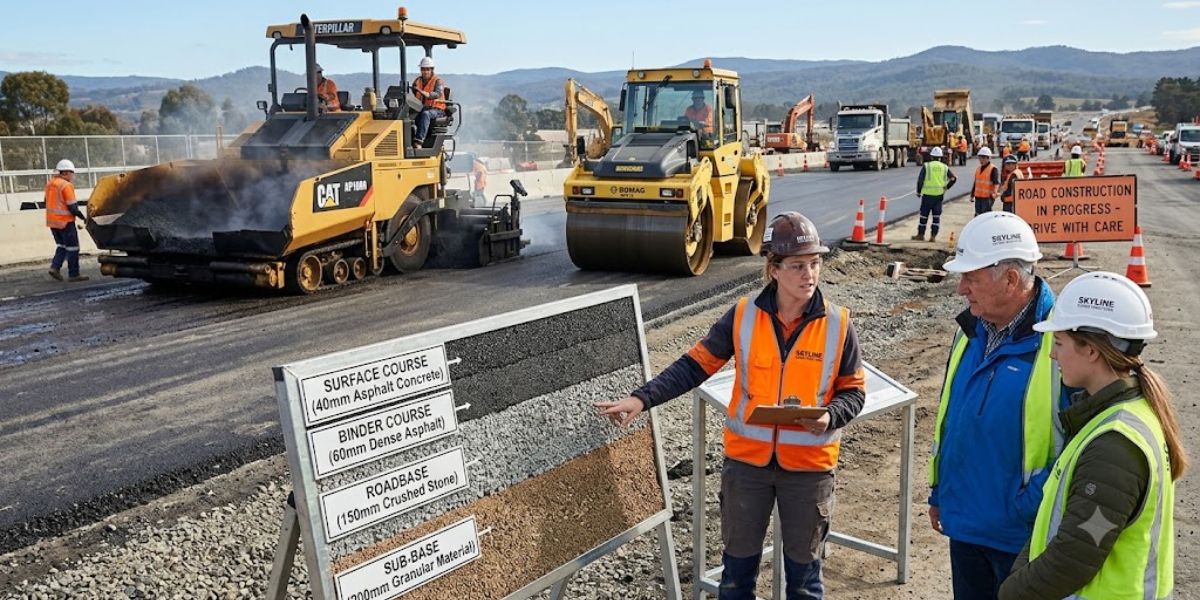
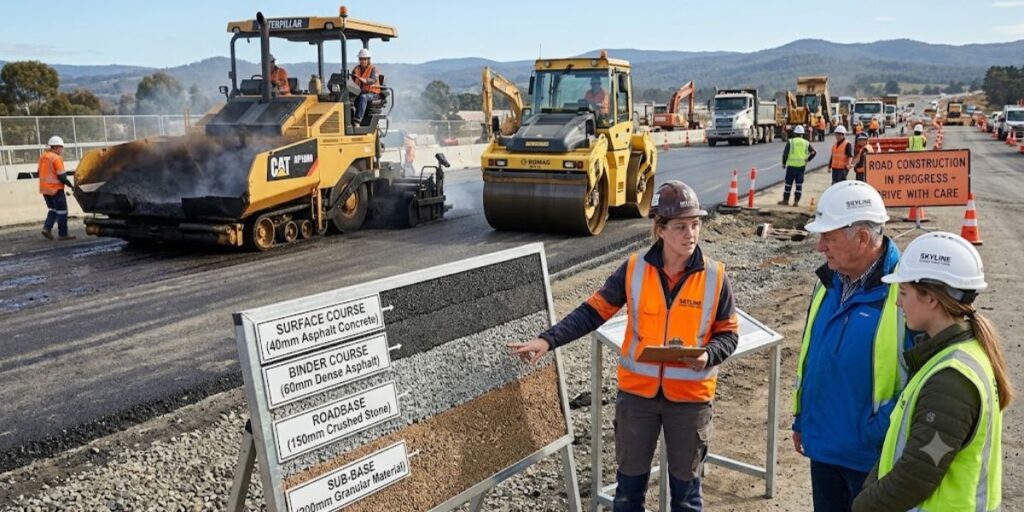
Modern roads are constructed in multiple layers, each serving a specific structural purpose. The subbase layer, typically composed of crushed stone or gravel, sits atop the compacted subgrade and provides additional load distribution and drainage. Above this lies the base course, made of denser aggregate material, which further strengthens the road’s ability to bear traffic loads.
The final layer is the surface course, commonly made of asphalt concrete or Portland cement concrete, which provides a smooth, durable riding surface. Asphalt roads are constructed by heating and mixing bitumen with aggregates, then laying and compacting the mixture using paving machines and rollers. Concrete roads involve pouring a cement, sand, and aggregate mixture into forms, followed by curing to achieve strength. Each layer must be compacted to precise specifications, as inadequate compaction is one of the leading causes of premature road failure.
Drainage Systems and Road Furniture
Effective drainage is one of the most important factors in road longevity. Culverts, ditches, and stormwater drains are installed to channel water away from the road structure, preventing waterlogging and subgrade weakening. Without proper drainage, water infiltration can cause the pavement to crack, rut, or collapse over time.
Once the pavement layers are complete, road furniture such as guardrails, signage, streetlights, and pavement markings are installed to enhance safety and guide traffic. Pedestrian infrastructure, including sidewalks, crosswalks, and curb ramps, is also added to accommodate all road users, particularly in urban and suburban areas.
Quality Control and Testing
Throughout the construction process, quality control teams conduct regular testing to ensure materials and workmanship meet engineering standards. This includes testing soil compaction density, asphalt temperature and thickness, and concrete strength through core sampling. Laboratories analyze material samples to verify they meet specified standards for durability and performance.
Any deviations from specifications are corrected before construction proceeds further. This rigorous testing regime helps prevent costly failures and ensures the road will perform safely under expected traffic conditions for its intended design life, which typically ranges from fifteen to thirty years depending on construction type and traffic loads.
Environmental and Sustainability Considerations
Modern road construction increasingly incorporates sustainable practices to minimize environmental impact. This includes using recycled materials such as reclaimed asphalt pavement, reducing carbon emissions through energy-efficient equipment, and implementing erosion control measures during construction. Some projects incorporate permeable pavements that allow water infiltration, reducing stormwater runoff and supporting groundwater recharge.
Noise barriers and vegetation buffers are also used to reduce the impact of traffic noise on nearby communities. As sustainability becomes a greater priority worldwide, engineers continue to explore new materials and techniques that reduce the environmental footprint of road infrastructure while maintaining structural performance.
Maintenance and Longevity
Road construction does not end once the surface is laid; ongoing maintenance is essential to preserve the investment and ensure safety. Routine maintenance activities include crack sealing, pothole repair, resurfacing, and drainage cleaning. Periodic inspections help identify issues before they escalate into major structural problems.
Preventive maintenance strategies, such as applying seal coats or thin overlays, extend pavement life and reduce long-term costs compared to reactive repairs. Climate, traffic volume, and material quality all influence how frequently maintenance is required, making a well-planned maintenance schedule a critical component of any road infrastructure strategy.
Conclusion
Road construction is a multidisciplinary process that requires careful planning, precise engineering, quality materials, and skilled labor. From initial surveys to the final layer of pavement, every stage plays a vital role in creating roads that are safe, durable, and efficient. As technology advances, road construction methods continue to evolve, incorporating smarter materials, sustainable practices, and improved techniques that enhance performance while reducing environmental impact.
Understanding this process highlights the significant effort and expertise behind the roads we use every day, and underscores the importance of continued investment in transportation infrastructure.
Frequently Asked Questions
1. How long does it take to build a road?
The timeline varies widely depending on the road’s length, complexity, and terrain. A short residential street may take a few weeks, while a highway spanning several kilometers can take months or even years, including planning, permitting, and construction phases.
2. What is the difference between asphalt and concrete roads?
Asphalt roads are made from a mixture of bitumen and aggregates, offering a smoother ride, faster construction, and easier repairs, but generally shorter lifespans. Concrete roads use cement, sand, and aggregate, providing greater durability and longevity, though they are more expensive and time-consuming to construct and repair.
3. Why is soil compaction so important in road construction?
Proper soil compaction increases the load-bearing capacity of the subgrade and reduces the risk of settlement, cracking, and structural failure. Inadequately compacted soil can lead to uneven surfaces, potholes, and a significantly reduced road lifespan.
4. How do engineers decide where a new road should be built?
Route selection is based on factors such as traffic demand, population growth, environmental impact, terrain, land availability, and cost. Engineers use surveys, geographic data, and community input to identify the most efficient and least disruptive path.
5. What causes potholes to form?
Potholes typically form when water seeps into cracks in the pavement, freezes and expands, or weakens the underlying layers. Traffic loads then cause the weakened pavement to collapse, creating a pothole. Poor drainage and inadequate maintenance accelerate this process.
6. How long do roads typically last before needing major repairs?
Most roads are designed to last between fifteen and thirty years before requiring major rehabilitation, although this depends on traffic volume, climate conditions, material quality, and maintenance practices. Regular upkeep can significantly extend a road’s usable life.
7. What role does drainage play in road durability?
Drainage prevents water from accumulating on or beneath the road surface. Without effective drainage systems, water infiltration weakens the subgrade and pavement layers, leading to cracking, rutting, and premature failure.
8. Are recycled materials used in road construction?
Yes, many modern road projects use recycled materials such as reclaimed asphalt pavement, recycled concrete aggregate, and even recycled plastics to reduce costs and environmental impact while maintaining structural performance.
Related Articles
Bulk Earthworks vs General Earthworks: What’s the Difference?
Earthworks form the base of almost every construction project whether it is…
How Much Does a Driveway Cost to Build in Perth?
Constructing a new driveway in Perth can drastically change the appearance and…
How to Prepare the Ground for a Horse Arena
A well developed horse arena begins from under the surface. Before implementing…