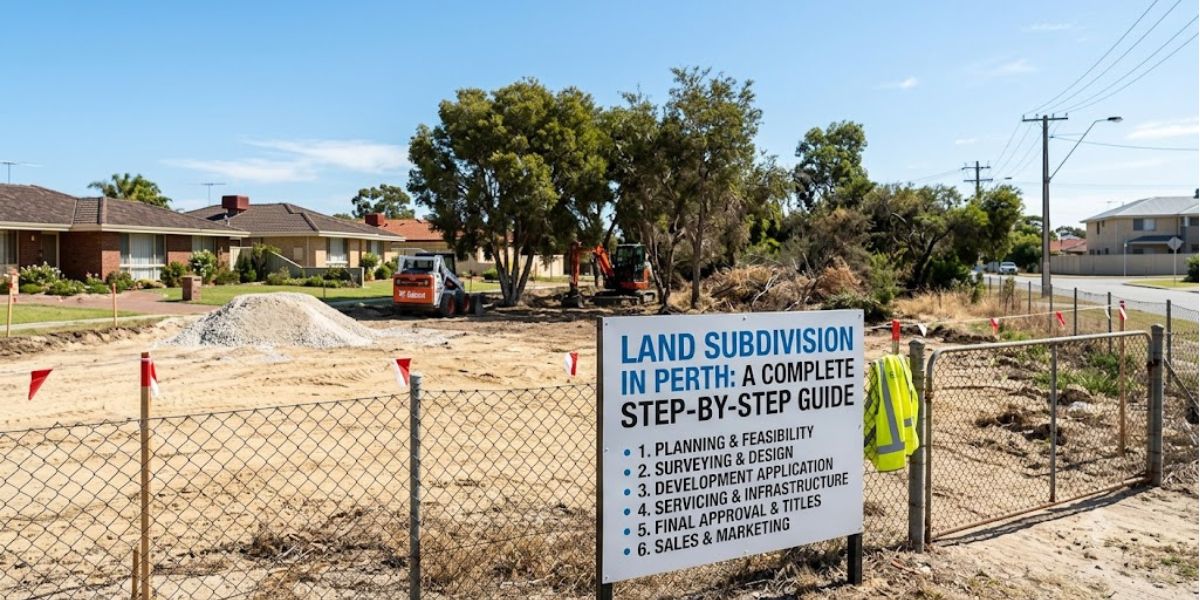
Land Subdivision in Perth: A Complete Step-by-Step Guide
Land Subdivision in Perth: A Complete Step-by-Step Guide
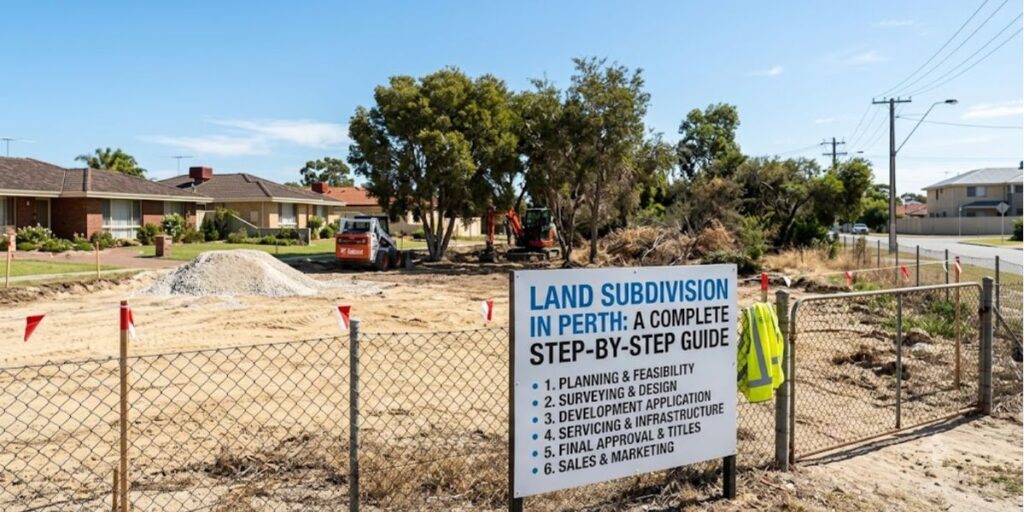
Land subdivision in Perth can be an effective way to unlock the value of a property, create additional residential lots or prepare land for future development. However, subdividing land is more involved than simply drawing a new boundary on a plan. The process involves planning controls, surveying, approvals, servicing, infrastructure and title registration.
In Western Australia, subdivision applications are generally determined by the Western Australian Planning Commission (WAPC) under the relevant planning and land legislation. The exact process can vary depending on the property’s zoning, location, proposed number of lots and type of subdivision.
This guide explains the typical process of land subdivision in Perth, from checking whether your property is suitable through to obtaining new titles.
What Is Land Subdivision?
Land subdivision is the process of dividing an existing parcel of land into two or more separate lots. Depending on the circumstances, subdivision can create freehold, survey-strata, strata or other forms of lots.
For example, a homeowner with a large residential block may investigate whether the existing property can be divided into two lots. A developer may subdivide a larger parcel into multiple residential lots for construction and sale.
However, approval is not automatic. The WAPC assesses subdivision proposals against relevant planning policies, the local planning scheme and other applicable requirements.
Step 1: Check Whether Your Property Can Be Subdivided
The first step is to establish whether subdivision is realistically possible.
Start by checking:
- The property’s zoning
- Minimum and average lot size requirements
- Existing dwelling and building locations
- Access arrangements
- Available services
- Drainage requirements
- Existing easements and restrictive covenants
- Site constraints
- Local planning requirements
- Relevant state planning policies
Residential subdivision in Western Australia is assessed under applicable planning requirements, including the WAPC’s residential subdivision policy. The policy provides guidance for creating residential lots and is intended to work alongside local planning frameworks.
Do not assume that having a large block automatically means you can subdivide it. The property’s location and planning controls are equally important.
Step 2: Speak to a Licensed Land Surveyor
A licensed land surveyor is one of the most important professionals in the subdivision process.
Your surveyor can assess the existing property, undertake the necessary survey work and prepare a proposed subdivision plan. WAPC requires subdivision plans to be based on an accurate and up-to-date feature survey showing relevant physical features and improvements such as buildings and driveways.
A surveyor can also help identify practical issues such as:
- Boundary locations
- Existing structures
- Levels and contours
- Driveway access
- Proposed lot configuration
- Easements
- Existing services
- Potential development constraints
Getting professional advice early can prevent you from spending money on a subdivision proposal that is unlikely to receive approval.
Step 3: Develop a Subdivision Concept Plan
Once the site has been surveyed, the proposed lot arrangement can be designed.
The concept plan should consider more than simply achieving the maximum number of lots. It should also account for:
- Lot dimensions and configuration
- Street access
- Vehicle access
- Drainage
- Existing trees and vegetation
- Utility connections
- Retaining requirements
- Building envelopes
- Future development potential
The WAPC’s general subdivision principles emphasise site-responsive design, orderly planning, appropriate lot arrangements and efficient transport and infrastructure outcomes.
For residential projects, the applicable planning controls may affect the size and configuration of the proposed lots.
Step 4: Investigate Services and Site Constraints
Before submitting an application, determine whether the proposed lots can be appropriately serviced.
Depending on the location and project, investigations may include:
- Water supply
- Sewer connection
- Electricity
- Telecommunications
- Stormwater drainage
- Road access
- Fire protection requirements
- Existing underground infrastructure
The availability and location of services can have a major influence on the subdivision design and overall project cost.
You should also investigate whether the property has environmental, heritage, bushfire, flood or other constraints that could affect the proposal.
Step 5: Prepare the Subdivision Application
Once the proposal has been developed, the necessary application documents can be prepared.
For a typical freehold, survey-strata or leasehold survey-strata subdivision application, WAPC’s current guidance identifies documents such as:
- Subdivision plan
- Current Certificate of Title
- Landowner consent
- Supporting documentation
- Applicable application fee
The subdivision plan must be supported by an accurate feature survey.
Depending on the project, additional reports or supporting information may be required.
Step 6: Lodge the Application With WAPC
Subdivision applications can be lodged through Planning Online, the Western Australian Government’s digital portal for planning applications. The portal allows applicants to submit applications, make payments and communicate regarding applications.
The application is then assessed and referred to relevant parties where required.
This is an important distinction: subdivision applications are not simply approved by your local council. WAPC is responsible for determining freehold, survey-strata and leasehold survey-strata subdivision applications, although local government and other authorities may be involved in the assessment process.
Step 7: Assessment and Referrals
After lodgement, the proposal may be referred to the relevant local government, government agencies and utility providers for comment.
These parties may consider issues such as:
- Planning compliance
- Road access
- Drainage
- Water and sewer
- Electricity
- Public open space
- Environmental considerations
- Infrastructure
- Local site conditions
The local government’s comments can therefore play an important role in the assessment, even though the WAPC determines many subdivision applications.
Step 8: Receive the Subdivision Approval
If the WAPC approves the subdivision, the approval may contain conditions.
These conditions need to be addressed before the subdivision can proceed to final clearance and title creation.
Conditions can relate to matters such as:
- Road construction
- Drainage
- Service connections
- Access
- Contributions
- Survey requirements
- Other infrastructure or planning obligations
The complexity of the conditions depends on the individual proposal.
Step 9: Complete the Required Subdivision Works
Once approval is received, the required works can be undertaken.
Depending on the subdivision, this could involve:
- Earthworks
- Drainage installation
- Crossover or access works
- Service connections
- Road-related works
- Retaining structures
- Clearing or site preparation
- Other infrastructure requirements
The exact work required will depend on the conditions attached to the approval.
It is important to coordinate your surveyor, engineers, contractors, utility providers and relevant authorities so that required clearances are obtained efficiently.
Step 10: Obtain Clearance of Conditions
After completing the required works or making acceptable arrangements, evidence of compliance must be provided to the relevant authorities.
The subdivision process does not finish simply because the WAPC has issued an approval. Conditions must generally be satisfied before the proposal can move through the final stages.
Landgate notes that subdivision involves coordination between private consultants, local government, state agencies, utility providers and the WAPC.
Step 11: Lodge the Plan With Landgate
The approved subdivision plan progresses to Landgate for examination and registration.
Landgate manages the land titles system in Western Australia and examines subdivision plans before new titles can be created.
The plan examination process involves checking the plan and associated requirements before it can proceed to registration.
Your licensed surveyor generally plays a central role in preparing and lodging the plan and dealing with Landgate requirements.
Step 12: Receive the New Titles
Once the necessary requirements have been satisfied and the subdivision plan is registered, separate titles can be created for the new lots.
At this point, the subdivision has reached its practical completion from a land-title perspective.
The new lots can then potentially be:
- Sold
- Retained
- Developed
- Financed
- Transferred
Subject to any remaining planning, building, servicing or other requirements.
How Long Does Land Subdivision in Perth Take?
There is no single timeframe that applies to every subdivision.
The duration depends on:
- Number of proposed lots
- Type of subdivision
- Planning complexity
- Site conditions
- Required referrals
- Infrastructure requirements
- WAPC assessment
- Conditions of approval
- Time required to complete works
- Landgate examination and registration
The official Planning Online guidance states that processing time depends on the complexity of the application and the number of applications being assessed, with statutory timeframes applying.
A straightforward residential subdivision can be significantly different from a large multi-lot development requiring extensive infrastructure.
How Much Does Subdivision Cost in Perth?
The cost varies substantially from one property to another.
Potential expenses include:
- Surveyor fees
- Planning and application fees
- Engineering fees
- Soil or site investigations
- Civil works
- Earthworks
- Drainage
- Utility connections
- Road and access works
- Retaining walls
- Council or authority requirements
- Landgate and registration costs
- Professional and legal fees
WAPC application fees are set according to the applicable fee schedule and can change over time.
For this reason, it is better to obtain a project-specific feasibility assessment and cost estimate rather than relying on a generic subdivision price.
Common Mistakes to Avoid
Assuming your block is automatically subdividable
A large block does not guarantee approval. Always check zoning, planning controls and site constraints first.
Designing the subdivision before getting a proper survey
An inaccurate site plan can result in an impractical or non-compliant proposal.
Ignoring infrastructure costs
New lots may require significant servicing and civil works. These costs can materially affect the project’s feasibility.
Focusing only on the number of lots
The maximum number of lots is not always the most profitable outcome. Lot usability, access, construction costs and market demand also matter.
Underestimating approval conditions
An approval may contain conditions requiring additional works or contributions. These should be factored into your financial planning.
Final Thoughts
Land subdivision in Perth involves considerably more than dividing a property into smaller pieces. The process typically moves from feasibility assessment and surveying through planning approval, referrals, infrastructure works, condition clearance, Landgate examination and finally the creation of new titles.
The best approach is to start with professional advice from a licensed land surveyor and, where appropriate, a planning or development professional. Early assessment can identify planning restrictions, servicing challenges and likely project costs before you commit to the full application process.
Because subdivision requirements and fees can change, always confirm the current requirements with the relevant Western Australian authorities before proceeding. Planning Online provides the current application and lodgement information, while WAPC policies provide the planning framework used to assess subdivision proposals
FAQs About Land Subdivision in Perth
1. Can I subdivide my property in Perth?
Potentially, yes. Whether a property can be subdivided depends on factors including zoning, lot size requirements, planning controls, access, services and site-specific constraints. A licensed surveyor or planning professional can assess the property’s subdivision potential.
2. Who approves land subdivision in Perth?
The Western Australian Planning Commission is responsible for determining many subdivision applications in Western Australia, including freehold and survey-strata subdivision applications. Applications may also be referred to local government and other relevant authorities for comment.
3. Do I need a surveyor to subdivide land?
A licensed land surveyor is generally essential for preparing the required survey and subdivision plan. WAPC requires subdivision plans to be based on an accurate, up-to-date feature survey.
4. How many lots can I create from my property?
There is no universal number. The potential lot yield depends on the property’s zoning, applicable planning requirements, site dimensions, access, servicing and other constraints.
5. Do I need council approval for subdivision?
The subdivision application is generally determined through the WAPC process, but the relevant local government is involved in assessment and referral. Local planning requirements and council-related conditions can therefore affect the outcome.
6. Can I subdivide without demolishing my existing house?
In some circumstances, yes. The existing dwelling can potentially remain on one of the proposed lots if the subdivision design and applicable planning requirements allow it. The position of the dwelling, setbacks, access and services all need to be considered.
7. How long does land subdivision take in Perth?
The timeframe depends on the complexity of the proposal, assessment process, required works and title registration. Simple projects may progress more quickly than complex multi-lot subdivisions requiring extensive infrastructure.
8. What documents are needed for a subdivision application?
Typical requirements include a subdivision plan, current Certificate of Title, landowner consent, supporting documentation and the applicable fee. Additional information may be required depending on the proposal.
Related Articles
Bulk Earthworks vs General Earthworks: What’s the Difference?
Earthworks form the base of almost every construction project whether it is…
How Much Does a Driveway Cost to Build in Perth?
Constructing a new driveway in Perth can drastically change the appearance and…
How to Prepare the Ground for a Horse Arena
A well developed horse arena begins from under the surface. Before implementing…